
AI and medical ethics: what every healthcare professional must know
When the algorithm enters the care relationship Medical ethics is nothing new. The Hippocratic Oath, in its various modern versions,…


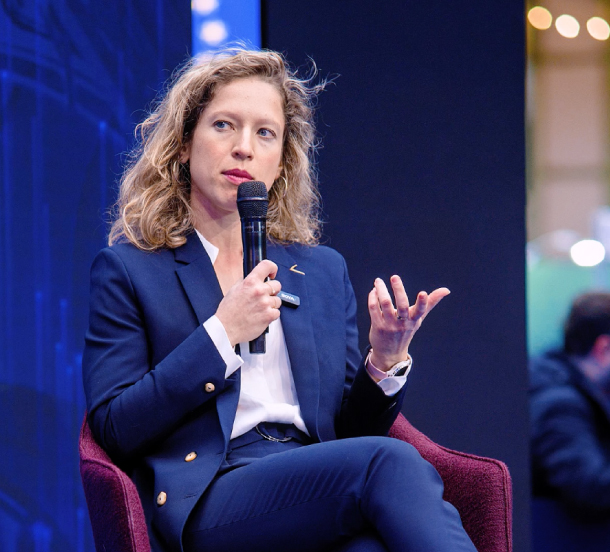
A few years ago, I made an observation that many caregivers make, but that no one really talks about.
Medicine moves forward. Technologies move forward. But we, on the ground, are often the last to benefit from them.
I am Dr Solène Vo Quang. An oral and maxillofacial surgeon, with 16 years of practice. My daily work is oral surgery. Procedures where every move counts, where error is not an option.
And one day, I realised something.
My patients were afraid. Not only of the procedure. Afraid of the practice. Afraid of the pain. Some had not seen a doctor in years. And I, with my surgical skills, had no tool to help them in that area.
It was that gap that pushed me to look elsewhere. To go to the United States. To discover clinics that were integrating virtual reality to reduce anxiety. Practices where AI handled the admin while the caregiver focused on care.
When I came back, I integrated everything into my practice in Paris. VR first. Then artificial intelligence. Not as gadgets. As therapeutic tools, tested with the same rigour as a surgical protocol.
And I began to talk about it. To colleagues. At conferences: more than 20 to date, in Dubai, in Paris, in front of doctors’ unions.
Most caregivers are not against AI. They’re lost. They don’t know where to start. No one explains to them concretely how to go about it.
That’s why I created Hack Your Care. And that’s why today, I am launching the Dr Solène Academy.
It’s an online training, 100% video, built for self-employed healthcare professionals. Doctors, dentists, physiotherapists, nurses, pharmacists; whatever your specialty.
The goal: to give you a concrete method to evaluate, choose and integrate AI tools into your practice. In complete safety. Without the bullshit.
No top-down theoretical course. No technical jargon. Concrete things. Tools that I use myself every day. Results that I have measured. Mistakes that I made and what they taught me.
Before building this training, I asked a simple question to caregivers like you: what is holding you back with AI?
The answers were clear. Choosing tools. Budget. Data protection. And one word kept coming back: concrete.
Message received.
The training is structured around 8 real problems faced by healthcare professionals. From the broadest to the most specific. With guided exercises, concrete cases, interviews with caregivers who dared to take the leap.
In the age of AI, care remains human.
AI does not replace the caregiver. It will never replace the listening, the clinical eye, the intuition that you develop after years of practice. But AI is a lever. A lever to care better.
Training #01 of the Dr Solène Academy is coming soon. Stay connected.
When the algorithm enters the care relationship Medical ethics is nothing new. The Hippocratic Oath, in its various modern versions,…

Three terms, one persistent confusion "Artificial intelligence," "machine learning," "deep learning," "algorithm," "neural network"… These terms circulate in medical conferences,…

A 5-year window to avoid being left behind The world of healthcare is undergoing an unprecedented technological transformation. Artificial intelligence…